JOB 003
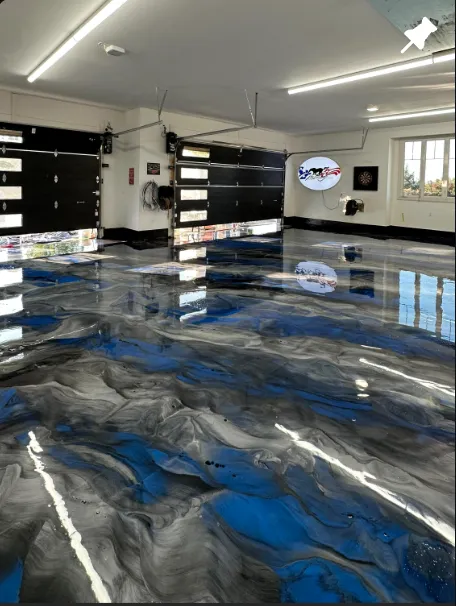
Residential garage
- Type
- Residential garage
- System
- Metallic epoxy
- Palette
- Blue / black / silver
- City
- Woodbridge
FLOORS FOR · BASEMENTS
Basement slabs sit against the ground, and moisture moving up through the concrete is the most common reason a basement coating fails. A basement floor starts with finding out what the slab is doing.
A garage slab mostly fights what comes in from above: salt, tyres, fluids. A basement slab also deals with what comes up from below. Older GTA homes in particular may not have a vapour barrier under the slab, and moisture vapour pushing up through concrete can lift a coating that is not designed for it.
That is why a basement quote starts with questions about the house and the slab, and often with moisture testing, before anyone talks about colour.
Our moisture-testing guide explains the common test methods and what the results mean for a coating.
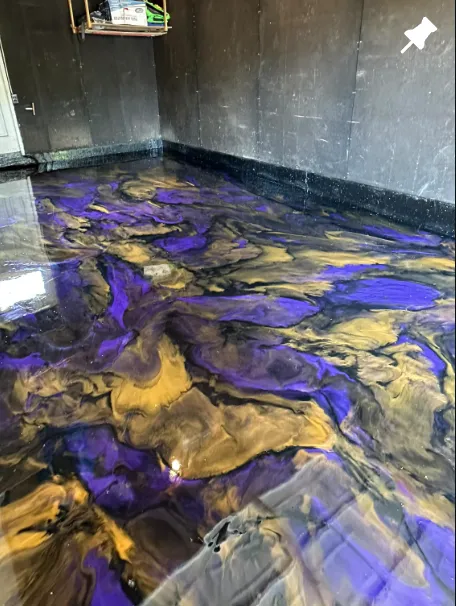
Metallic epoxy turns a basement rec room or bar area into a feature floor. Flake systems add texture and hide everyday dust in workshops and storage areas. Solid colour keeps a home gym or laundry room clean and bright. Every pour is one of a kind, so we use photos of real floors rather than promising an exact pattern.
Active water leaks have to be fixed first. Moisture vapour coming through the slab is a separate issue that is measured, and the result decides whether a coating is suitable and what preparation or primer it needs.
Some coating products have an odour while they are applied and curing. It depends on the product. Canada caps the VOC content of architectural floor coatings (SOR/2009-264 sets 250 g/L for opaque floor coatings, for example), but low-VOC is not the same as odour-free, so ask about the specific system and plan ventilation for the install days.
Usually, once the old flooring, adhesive and residue are removed and the concrete is prepared. Leftover adhesive is one of the things we look for in your photos.
NEXT STEP
Send a few photos and the rough size. You'll get straight answers about your floor.