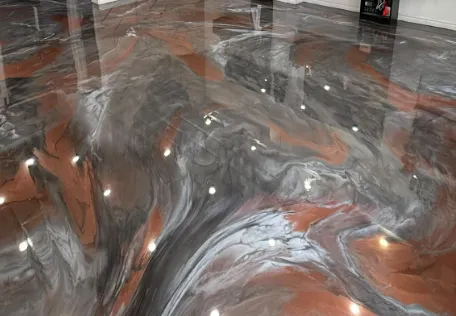
JOB 007
Commercial / warehouse floor
- Type
- Commercial / warehouse floor
- System
- Marble-art epoxy
- Palette
- Grey / rust / charcoal
FLOORS FOR · WAREHOUSES
Forklifts, pallet jacks, carts and racking loads put a different kind of stress on a floor than foot traffic does. The specification starts with how the floor is used every day.
These answers shape the preparation, the coating thickness and the topcoat we propose.
Large commercial slabs often have joints, old coatings, oil-soaked areas and repairs from previous tenants. Preparation and joint treatment are usually the biggest part of the work, and they are where cheap quotes cut corners. A real number needs a look at the slab first.
Many operations can't stop completely. Floors can often be done in phases so part of the space stays in use. Phasing, access and when each area can return to service belong in the quote.
Often, yes. Phasing depends on layout, access and how the work areas can be separated. Send a floor plan or photos and we'll suggest an approach.
The City of Toronto's permit guidance doesn't list floor coatings either way, and a coating on its own is generally not construction work. Related work can be different: structural repairs, plumbing changes, or a change of use (for example, turning a unit into a restaurant) needs a building permit even if no construction is planned. Check with the City or your property manager if you're unsure.
REAL WORK
JOB 007
NEXT STEP
Send a few photos and the rough size. You'll get straight answers about your floor.